
SPECIAL EDUCATIONAL NEEDS & sen support
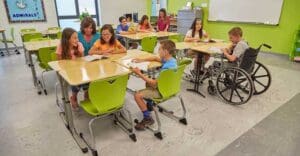
Special educational needs (“SEN”) can affect a child or young person’s ability to learn. For example, someone’s SEN might affect their:
- Reading and writing, for example because they have dyslexia.
- Ability to understand things.
- Behaviour or ability to socialise, for example they struggle to make friends.
- Concentration levels, for example because they have ADHD.
- Physical ability to do things such as writing.
There are two questions to ask when thinking about whether a child or young person has SEN.
When we ask these questions, we need to also think about how old the child is, as different rules apply and that might affect whether they will be considered to have SEN.
Do they have a learning difficulty or disability?
A child of compulsory school age or young person has a learning difficulty or disability if:
- They have significantly greater difficulty in learning than the majority of others of the same age, or
- They have a disability which makes it difficult for them to use the facilities normally provided for others of the same age in mainstream schools or post-16 institutions.
Someone has a disability if they have a physical or mental impairment which has a substantial and long-term adverse effect on their ability to carry out day-to-day activities.
Does that learning difficulty or disability call for special educational provision to be made?
For children aged 2 or more years and young people, special educational provision is any educational or training provision that is additional to, or different from, that is “ordinarily available provision” for other children or young people of the same age.
This could cover a wide range of things, such as.
- Having materials provided in a larger font.
- Needing one-to-one support
- Communicating through sign language
- Needing small class sizes
- Being in a different year group to children/young people their age.
If the answer to both of these questions is yes, then your child or young person has SEN.
Children and young people with SEN are entitled to extra support with learning at nursery, school, or college.
Some children or young people may need additional support which is not special educational provision; for example, they might need certain treatments or medicines administered at school because of a medical condition they have.
To be classed as having SEN, they must need something educational in nature or training which is different from “ordinarily available provision” given to other children or young people of the same age.
You should also consider whether your child (of any age) or young person is receiving health care provision or social care provision, which educates or trains them in some way.
If it does, then this provision is considered special educational provision.
This could include for example, speech and language therapy or occupational therapy.
The purpose of SEN support is to help children and young people achieve the outcomes or learning objectives set for them by the school in conjunction with parents and pupils themselves.
SEN support can take many forms, including:
- a special learning programme for your child
- extra help from a teacher or a learning support assistant
- making or changing materials and equipment
- working with your child in a small group
- observing your child in class or at break and keeping records
- helping your child to take part in the class activities
- making sure your child has understood things by encouraging them to ask questions and to try something they find difficult
- helping other children work with your child, or play with them at break time
- supporting your child with physical or personal care, such as eating, getting around school safely, toileting or dressing.
- advice and/or extra help from specialists such as specialist teachers, educational psychologists, and therapists.
Identifying Special Education Needs
It will be important to identify the main characteristic of your child’s need (primary need). However, support plans will identify all the needs of your child within four broad areas. The four broad areas of need are:
- Cognition and learning
- Social, emotional and mental health
- Communication and interaction
- Sensory and physical
Schools, nursery schools and colleges should identify pupils who may be having difficulty and decide whether SEN support is appropriate.
However, sometimes it is the parent that may be the first to notice their child has special educational needs. If you think your child in nursery or school needs SEN support talk to their teacher or to the Special Educational Needs Coordinator (SENCO). For colleges you will need to talk to student or learning support, this information should be on their website.
Deciding whether to put in place SEN support starts with the desired outcomes, the expected progress and the views and wishes of you and your child.
The special educational needs coordinator (SENCO) and the teacher will work with you and your child to create an SEN Support Plan which should be reviewed at least three times a year. This will be based around your child’s strengths and needs and will identify outcomes for your child that will be agreed with you.
Every school must publish an SEN information report about the SEN provision the school makes. You can find this and the School SEN p0licy on the school’s website.
Schools have a legal duty to use their “best endeavours” to make “reasonable adjustments” to secure special educational provision for all children they are responsible for.
(Equality Act 2010 & Children and Families Act 2014 section 66)
They must make reasonable adjustments, including the provision of auxiliary aids and services for disabled children, to prevent them being put at a substantial disadvantage.
These duties are anticipatory – they require thought to be given in advance to what disabled children and young people might require and what adjustments might need to be made to prevent that disadvantage.
Schools also have wider duties to prevent discrimination, to promote equality of opportunity and to foster good relations.
The Equality Act 2010 specifies the duty on education providers to make ‘reasonable adjustments’ to ensure that disabled pupils are not discriminated against.
Further education (FE) colleges manage their own admissions policies and are also prohibited from discriminating against disabled young people in respect of admissions. Students will need to meet the entry requirements for courses as set out
by the college, but should not be refused access to opportunities based on whether or not they have SEN.
All schools should have a clear approach to identifying and responding to SEN.
Identifying need at the earliest point and then making effective provision improves long-term outcomes for the child or young person.
The SEND Code of Practice contains guidance on what nurseries, schools and colleges should be doing to identify and support children and young people with SEN. The SEND Code of Practice applies to all settings except independent schools and says:-
All children and young people are entitled to an education that enables them to make progress so that they:
- achieve their best
- become confident individuals living fulfilling lives, and
- make a successful transition into adulthood, whether into employment, further or higher education or training (6.1)
Here are some other extracts from the code:-
Class and subject teachers, supported by the senior leadership team, should make regular assessments of progress for all pupils. These should seek to identify pupils making less than expected progress given their age and individual circumstances. (6.17)
Where a pupil is identified as having SEN, schools should take action to remove barriers to learning and put effective special educational provision in place. This SEN support should take the form of a four-part cycle through which earlier decisions and actions are revisited, refined and revised with a growing understanding of the pupil’s needs and of what supports the pupil in making good progress and securing good outcomes. This is known as the graduated approach. It draws on more detailed approaches, more frequent review and more specialist expertise in successive cycles in order to match interventions to the SEN of children and young people. (6.44)
Where a pupil is receiving SEN support, schools should talk to parents regularly to set clear outcomes and review progress towards them, discuss the activities and support that will help achieve them, and identify the responsibilities of the parent, the pupil and the school. Schools should meet parents at least three times each year. (6.65)
The college and the student together should plan any changes in support. Support for all students with SEN should be kept under review, whether or not a student has an EHCP (7.19)
All mainstream schools receive money for special educational needs support and resources.
Schools can decide how to spend this money. This is called “delegated” funding because it is given (delegated) to schools by local authorities or the Education Funding Agency from money they receive from central government.
The SEN part of the school’s income is sometimes called the “notional” SEN budget because it is not based on the school’s actual numbers of pupils with special needs, but on a formula.
EARLY YEARS
SENIF
The local authority must ensure that all providers delivering funded early education places meet the needs of children with SEN and disabled children. In order to do this the local authority has funding arrangements in place so that early education is able to provide suitable support for these children.
From September 2024, SEN premium funding and inclusion funding will be replaced by SENIF (special educational needs inclusion funding).
Early Years Premium
Children that are eligible for the below free childcare entitlement may also be eligible for Early Years Pupil Premium (EYPP). The EYPP gives the childcare provider additional funding, which they can use to provide resources that will support your child.
So that they can claim this extra funding, your childcare provider will ask you to fill in the section on the Parent/Carer Agreement form. Your childcare provider will talk to you about what your child needs to help your child learn. They can then use the extra funding to make sure they get the support they need.
Disability Access Fund
If your child is in receipt of disability living allowance (DLA), then the nursery setting may be able to claim £910 per year to help meet your child's needs. This is a one-off payment paid to a provider on an annual basis (one payment per financial year)
The purpose of the DAF is to help the childcare provider make reasonable adjustments at their setting to improve the child's access to funded early education. Parents should speak to their childcare provider before they make the application.
SEN Funding in Mainstream Schools
his information is about funding for special educational needs (SEN) in mainstream schools. This includes academies and free schools.
What is SEN funding for?
The SEND Code of Practice says schools must:
…use their best endeavours to make sure that a child with SEN gets the support they need – this means doing everything they can to meet children and young people’s SEN
(6.2)
Schools should use some of their budget to buy resources and make provision for children who need additional help. This can take many forms. For example, children with SEN might need:
- changes to the curriculum
- special equipment or teaching materials
- the use of additional information technology
- small group work
- support in the classroom
- a base to work in or have quiet time.
Where does funding for SEN come from?
All mainstream schools receive money for special educational needs support and resources. Schools can decide how to spend this money. The SEN part of the school’s income is sometimes called the “notional” SEN budget because it is not based on the school’s actual numbers of pupils with special needs, but on a formula.
Schools get money for each pupil, based on actual pupil numbers. This is called the Age Weighted Pupil Unit (AWPU) and it is part of schools’ delegated funding. Some of this money is for general SEN provision. This might, for example, include the cost of providing the Special Educational Needs Coordinator (SENCO) and some other resources.
Government guidance says schools should provide up to the first £6,000 (on top of the AWPU) of additional or different support for those children who need it, including those with an EHCP. This does not mean that the school will spend £6,000 on every child with SEN. Sometimes schools use funds to help groups of children. Some children will need less help – and some children may need more.
You can ask your school how it uses its SEN budget to support your child and whether it has enough to make all the provision they need.
The SEND Code of Practice says:
"It is for schools, as part of their normal budget planning, to determine their approach to using their resources to support the progress of pupils with SEN. The SENCO, headteacher and governing body or proprietor should establish a clear picture of the resources that are available to the school. They should consider their strategic approach to meeting SEN in the context of the total resources available, including any resources targeted at particular groups, such as the pupil premium." (6.97)
School governors are responsible for the school’s policy on SEN. The headteacher and the SENCO ensure that the policy is put into practice. The SENCO organises support for individual children, but every teacher is responsible making sure that your child’s special educational needs are met in the classroom.
The SEN Information Report on the school’s website tells you more about the arrangements for SEN support and how to contact the SENCO.
The notional SEN budget for mainstream schools: operational guidance 2026 to 2027 - GOV.UK
High needs funding: 2026 to 2027 operational guide - GOV.UK
SEN Funding in Further Education Settings
The SEND Code of Practice says:
“Colleges, including sixth-form colleges and academies have a duty to use their best endeavours to secure the special educational provision that the young person needs… whether or not the students have EHC plans.” (7.3)
Higher Education Funding
The move to university is daunting for anyone, but it is especially so for many students with special educational needs. Knowing what support is available and getting it set up before starting university is a key part of making the transition to higher education go as smoothly as possible.
Disabled Students’ Allowance
The Disabled Students’ Allowance (DSA) provides funding for students with disabilities. It can fund non-medical helper support, such as study skills tutors for students with specific learning difficulties and mentors for students with mental health conditions or on the autistic spectrum.
It can also help fund equipment, such as computers and assistive technology, with the student paying the first £200 towards the cost of a computer.
All students who apply for DSA have a study needs assessment to determine what support is best for them. There are assessment centres based at universities across the country. After the assessment, the assessor writes up a report detailing what support the student needs.
DSA can be applied for before starting university, which is the best option in terms of getting support in place before starting a course. DSA only covers costs related to studying. Students can also apply for Personal Independence Payments (PIP) through the Department for Work and Pensions (DWP) to help cover the additional costs of living with a disability.
ORDINARILY AVAILABLE PROVISION (OAP)
Is a requirement for the LA to set out what educational and training provision they expect to be made available by schools, early years settings and FE providers for children and young people with special educational needs.
Ordinarily available provision’ is a phrase, first used in 2023 by the Department for Education and refers to inclusive, high-quality teaching and everyday adjustments that all early year's settings, mainstream schools, and colleges are expected to provide for all children and young people, including those with mild or emerging SEND from within their own resources.
The SEND CODE of Practice paragraph 4.4 states that...
THE GRADUATED APPROACH is a four-step cycle, aiming to understand an individual’s needs to allow support to be put in place and ensure progress.
This is also known as SEN support.
The Graduated Approach: A Guide for Parents and Carers | Central Bedfordshire SEND Local Offer
Graduated Approach Implementation Network (GAIN) | Central Bedfordshire SEND Local Offer

THE FOUR PARTS OF THE CYCLE THAT THE GRADUATED APPROACH REFERS TO ARE CALLED -
ASSESS, PLAN, DO, REVIEW (APDR)
- Assess - An initial assessment of the child’s needs is discussed to create a starting point from which to work. These are known as baseline tests.
- Plan - An additional support plan is written with clear targets and deadlines of the expected progress.
- Do - Support is given to the child under the supervision of the classroom teacher.
- Review - There is no specific timeline for how frequently the reviews must be carried out, but most are done termly for feedback to be given to parents and carers.
The duty to make reasonable adjustments requires a school to take positive steps to ensure that disabled pupils can fully participate in the education provided by the school, and that they can enjoy the other benefits, facilities and services that the school provides for pupils.
In determining whether an adjustment is ‘Reasonable’ education settings should consider:
- What differences would the changes make to the Child or Young Person.
- How practical it would be to make the changes.
- The available resources and availability of additional funds
- Health and safety requirements
- How the adjustment might affect other pupils.
The aim should be, as far as possible, to remove or reduce any disadvantage faced by a disabled pupil.
The following examples are organised by the types of need used within the SEND CODE of Practice; this is not an exhaustive list and cross referencing with the Ordinarily Available Provision guide is advised. The lists can be used as a check list if needed.
The areas include:
- Physical Disability (PD)
- Speech Language and Communication (SLCN)
- Autism (ASD)
- Specific Learning Difficulties (SpLD)
- Moderate Learning Difficulties (MLD)
- Severe Learning Difficulties (SLD)
- Profound and multiple learning difficulties (PMLD)
- Social Emotional and Mental Health (SEMH)
- ADHD
- Hearing Impairment (HI)
- Visual impairment (VI)
- Multi-sensory Impairment (MSI)
- Medical Needs
It is important to remember that each pupil with SEND should be considered as an individual and their needs assessed as such. Advice from the relevant professionals and specialist services should be applied, including sourcing any necessary equipment.
Physical Disability
- A tablet or laptop
- Seating such as Heathfield chair or wobble cushion
- Pencil grips, different writing equipment and writing slopes if needed
- Accessible toilet/changing
- Accessible play areas/playground and differentiated PE
- Differentiated practical teaching e.g., Design and Technology or science
- Clear walkways in and outside of the classroom and wheelchair accessible walkways
- Additional toilet breaks/flexible toilet breaks
- Access to all of the school day, trips, and events etc.
- Making alterations to steps/stairs or installing handrails, and ramps
- Maintaining potholes on paths and ensuring flat surfaces for wheelchair users, and handrails where necessary.
- Disability friendly entrances with wide doors and lowered reception desks. Settings should also consider their exit doors to be directly onto a pathway which is flat without a step for ease of access particularly for fire exits. Do not block accessible entrances and exits.
Speech Language and Communication
- Using clear language
- Using literal language (avoiding phrases and expressions)
- Using a slower pace of delivery
- Providing print alongside verbal instructions/teaching
- Printing planning
Autism
- Adapted communication - be clear, be literal, use simple language
- Reduce sensory stimulation/prewarn the learner if sensory input will increase
- Processing time
- Understanding communication might be more direct
- A specific seat in class
- Provide visual supports to communication for nonverbal learners
- Leaving class early/late
- Planning for and preparing learners for changes to routines or daily timetable
Sensory Processing/Integration
- Fiddle toys/equipment
- Sensory breaks (if they can be whole class to taken independently)
- Ear defenders external or in-ear
- Low sensory environments
- Adapted uniform such as wearing softer fabrics or clothing items that are more accessible (e.g. no zips or buttons)
Cognition and Learning
- Providing manipulatives and resources, including in secondary
- Resources such as coloured paper
- Processing time
- Differentiated expectations for organisation and time keeping
- Printed notes (of the learning on screen)
- Differentiated and adapted learning
- Alternative recording such as listing or writing frame
- Learning breaks
- Chunked learning
- Simplified language
- Play based learning
- Sensory experiences
Social, Emotional and Mental Health
- Leaving class early or late
- Unpicking behaviour
- Specific seating
- Empathy or trauma informed approaches
- Allow transitional objects in pockets or bags
- Breaks in learning
- Pastoral support
- Additional movement allowed in class/movement breaks
Attention Deficit Hyperactivity Disorder
- Allowing movement, including alternative seating or standing to learn
- Extra processing time
- Increased instruction
- Differentiated behaviour expectations e.g., shouting out, organisation
- Visual prompts
- Resources such as checklists and timers
Hearing Impairment
- Use clear direct language
- Look at the listener
- Use of a radio aid (if needed)
- Specific seating (tailored to the child)
- Alternative formats such as video or audio
- Subtitles on videos
Visual Impairment
- Present physical prompts for learning
- Multi-sensory teaching
- Specific seating
- Extra printing, large paper or font (if needed) and different letter or word spacing
- Filming of windows/blinds – to reduce glare
- Redecoration to provide contrasting colour schemes around doors/floors and walls
- Yellow Line/contrasting edge markings for hazards and level changes on school grounds, specifically on steps
- Audio descriptions on videos
Medical Needs
- Food when needed e.g., diabetes or taking medication
- Water available
- Privacy and dignity for procedures or changing and a private space
- Toilet breaks when needed/not restricted
- Wearing of additional or adapted clothing e.g., a hat if needed for hair loss such as chemotherapy,
THERE ARE 3 STAGES OF SEN SUPPORT
STAGE 1
STAGE 2
AND THEN AN EHCP.
STAGE 1 SUPPORT
Some additional or different intervention within the school or setting will be required to enable the young person to access independent learning and the curriculum.
STAGE 2 SUPPORT
Builds on the arrangements for stage 1 and draws on more detailed approaches, more frequent review, and more specialist expertise in successive cycles in order to match interventions to the Special Educational Needs of the child / young person.
A SEN Support Plan needs to be individualised to each child or young person’s needs.
Each school will use their own plans and may call them IEP’s, IMP’s, etc.
The importance is that everything is recorded and reviewed, what has worked, what has not – this is the APDR cycle.
SEN SUPPORT MUST BE REVIEWED AT 3 LEAST 3 TIMES A YEAR.
Click here to see an example SEN Support Plan
Starting your SEND Journey | Central Bedfordshire SEND Local Offer
Further information can be found at IPSEA How should your nursery, school or college help?
Outreach services are available to schools for when they require additional support and advice regarding how to support children in their school with SEND.
Referrals need to be made by the school
Children DO NOT require a diagnosis of a SEND to be able to access outreach, and all outreach services can be contacted directly before referrals are submitted if schools would like a quick informal consultation.
Who can be referred:
Chiltern and Ivel (Social Communication & Interaction / Autism):
Children without an EHCP Year 1 onwards; Children with an EHCP from Year Reception
Jigsaw (SEMH):
Primary aged children from aged 5
Oak Bank- Umbrella (SEMH):
Secondary aged children and young people, Year 7-11
SpLD Inclusion Outreach: Year 1 - Year 11
Down Syndrome: Year 1 - Year 11
Please note, children below statutory school age should be referred to the Early Years SEND Team
For further information on the OUTREACH TEAMS and the referral process, please see Inclusion Outreach and Training | Central Bedfordshire SEND Local Offer
The SEND Code of Practice gives statutory guidance for children and young people aged 0 - 25 years.
All schools must use the code when working with people with special educational needs or disabilities.
It includes the legal requirements which must be followed by local authorities, health, and education services.
COMMUNICATION AND INTERACTION
Children and young people with speech, language, and communication needs (SLCN) have difficulty in communicating with others.
This may be because they have difficulty saying what they want to, understanding what is being said to them or they do not understand or use social rules of communication.
The profile for every child with SLCN is different and their needs may change over time. They may have difficulty with one, some or all the different aspects of speech, language, or social communication at different times of their lives.
They may also experience difficulties with language, communication, and imagination, which can impact on how they relate to others.
- How does your child/Young Person communicate? Do they communicate verbally? With symbols? Signing? Are they non-verbal?
- Is their communication age appropriate? Are there any delays? Can they make their wants/needs known? How?
- Can they have a conversation? Can a conversation be about any subject or must it be on their terms/a subject of their interest? Can they have a reciprocal conversation with a familiar or unfamiliar person?
- Do they communicate appropriately with peers at home and at school? Adults at home and school? What supports or prevents this? How do you know if they do not understand a situation?
- Can your child/Young Person interact with their peers e.g., in the classroom or playground? How do they interact with their peers?
- Speech, language and communication toolkits
SENSORY AND/OR PHYSICAL NEEDS
Some children and young people require special educational provision because they have a disability which prevents or hinders them from making use of the educational facilities generally provided. These difficulties can be age related and may fluctuate over time.
Some children and young people with a physical disability (PD) require additional ongoing support and equipment to access all the opportunities available to their peers.
- Does your child or young person have any physical or mobility needs?
- What are they? How does this impact on their day-to-day life?
- Can they walk unaided? Do they use a walker or a wheelchair?
- Does your child or young person have any sensory needs?
- E.g., do they have aversions to certain foods, sounds, smells, noises?
- Or do they crave certain foods, sounds, smells, noises, movement?
- Does your child or Young Person have any health conditions or health needs? What are they? Who supports them with this? What does their care entail?
For further information on sensory processing please click the link:
Helping your child with sensitivities
COGNITION AND LEARNING
Support for learning difficulties may be required when children and young people learn at a slower pace than their peers, even with appropriate differentiation.
Learning difficulties cover a wide range of needs, including moderate learning difficulties (MLD), severe learning difficulties (SLD), where children are likely to need support in all areas of the curriculum and associated difficulties with mobility and communication, through to profound and multiple learning difficulties (PMLD), where children are likely to have severe and complex learning difficulties as well as a physical disability or sensory impairment.
Setting/Learning
- Does your child/Young Person attend pre-school/nursery/school/college?
- Does your child/Young Person attend their setting full time?
- Are they on a part-time table?
- Do they enjoy attending? Is there anything they do not enjoy? Why?
- Are they making progress and learning?
- Are they academically behind, at age related expectations or ahead academically?
- How do they learn? Kinaesthetic, Visual, Auditory, Aural.
- Do they have additional support at school? What does this look like for them? Are they making progress with additional support?
- Do they work in the classroom, or do they work in a different school environment?
- Does your child or Young Person display any comprehension or processing difficulties? How does this impact on their learning?
Child development and growing up
SOCIAL, EMOTIONAL, AND MENTAL HEALTH DIFFICULTIES
Children and young people may experience a wide range of social and emotional difficulties which manifest themselves in many ways.
These may include becoming withdrawn or isolated, as well as displaying challenging, disruptive, or disturbing behaviour.
These behaviours may reflect underlying mental health difficulties such as anxiety or depression, self-harming, substance misuse, eating disorders or physical symptoms that are medically unexplained.
- Does your child or young person have any behavioral support needs? If so, can you describe them?
- What are their triggers?
- Are there any factors that escalate their behaviour? What strategies are used to help them regulate? Are they able to self-regulate?
- Do they have any worries, fears, or anxieties? How do these affect their daily life?
- Are their fears or anxieties managed? If so, how?
CYP | Child or Young Person | |
SEND | Special Education Needs and/or Disability | |
IEP | Individual Education Plan | |
IMP | Individual Mapping Plan | |
ILP | Individual Learning Plan | |
APDR | Action Plan Do Review | |
EHCNA | Education Health and Care Plan Needs Assessment | |
EHCP | Education Health and Care Plan | |
EOTIS / EOTIC | Education Other Than In School / Education Other than In College | |
PB | Personal Budget | |
RA | Reasonable adjustments | |
OAP | Ordinarily available provision | |
SEN | Special Educational Needs | |
SEP | Special Educational Provision | |
SEMH | Social Emotional and Mental Health | |
‘P’ Levels | Performance levels used to assess a child who is not yet within the national curriculum levels of attainment. | |
SLCN | Speech, language, and communication needs | |
MLD | Moderate learning difficulties | |
SLD | Severe learning difficulties | |
SpLD | Specific learning difficulties | |
PMLD | Profound and multiple learning difficulties | |
PD | Physical disability | |
OT | Occupational Therapy | |
EP | Educational psychologist | |
SALT | Speech and Language Therapy | |
PT | Physical Therapy | |
TA | Teaching Assistant | |
LSA | Learning support Assistant | |
EYFS | Early Years foundation Stage | |
FE | Further Education | |
PfA | Preparation for Adulthood (14-25) | |
NEET | Not in Education, Training or Employment | |
PEX | Permanent Exclusion | |
SUSPENSION | Fixed number of days excluded from school | |
Managed Move | Following a PEX, the Exclusion can be removed with a move to a new school | |
Universal Services | Services provided for all children and young people in the area. | |
SG | Statutory guidance – guidance that LA’s and other local bodies have a legal duty to follow | |
Supported Internship | A structured study program, based with an employer that is tailored to the individual needs of the young person which will equip them with the skills they need for the workplace. | |
CFA |
| |
SENDCOP |
| |
SEND Regs | The Special Educational Needs and Disability Regulations 2014 |
|
EQ ACT 2010 |
| |
EDU ACT |
| |
Working together to safeguard children |
| |
ICB | Integrated Care Board (previously known as CCG) |
|
JC | Joint Commissioning |
|
Panel | A decision-making body who meets to match criteria for services, i.e. short breaks, EHCNA’s, school placements |
|
Multi-disciplinary | Involves professionals from a range of disciplines (usually Education, Children’s Social Care and Health) |
|
Maintained School | Schools that are maintained by LA’s |
|
Independent School | Schools not maintained by a LA, or a voluntary aided school. Charitable trusts and organisations, particularly those catering for special educational needs, run some independent schools. |
|
Non-maintained special school | Non-profit schools which charge fees.
|
|
Section 41 Approved | Independent schools which have been approved by the Secretary of State under section 41 of the (CFA) as schools which a parent or young person can request to be named in an EHCP. |
|
OFSTED | Office for Standards in Education, Children’s Services and Skills. |
|
DfE | Department of Education |
|
IPSEA |
| |
CDC |
| |