
OUTCOMES
What are outcomes?
Outcomes help everyone involved understand what the support is intended to achieve.
They should:
- Be specific to your child or young person.
- Be realistic but ambitious.
- Focus on long-term aspirations.
- Help prepare children and young people for adulthood.
- Be reviewed regularly to measure progress.
Outcomes should reflect the views, wishes and aspirations of the child or young person and their family.
Outcomes can relate to:
- Education and learning
- Communication and interaction
- Social, emotional and mental health
- Physical and sensory needs
- Friendships and social relationships
For young people (Year 9 onwards), outcomes must support preparation for adulthood, including:
- Community participation
- Employment, training and further education
- Health and Well-being
- Independent Living
- Does each outcome relate to an identified need?
- Is it clear what success will look like?
- Can progress towards the outcome be measured?
- Are the outcomes ambitious and meaningful?
- Do they reflect my child's views, wishes and aspirations?
- Will achieving the outcome make a positive difference?
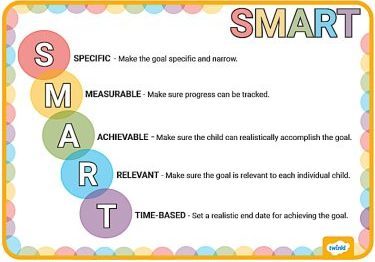
Outcomes must be SMART.
- Specific - clear about what the child will achieve.
- Measurable - progress can be monitored.
- Achievable - realistic for the child or young person.
- Relevant - linked to their needs.
- Time-bound - includes a timescale where appropriate.
Communication and Interaction
Vague
Sam will communicate his needs.
SMART
By the end of Key Stage 2, Sam will independently ask for help using a spoken sentence of at least 5 words in 4 out of 5 opportunities across school lessons.
Vague
Aisha will have better social skills.
SMART
By the end of key stage 3, Aisha will initiate and maintain a conversation with a peer for at least 3 exchanges on 4 out of 5 observed occasions.
Cognition and Learning
Vague
Ben will improve his reading.
SMART
By the end of year 2, Ben will improve his reading accuracy from 70 words per minute to 100 words per minute when reading age-appropriate texts.
Vague
Chloe's handwriting will improve.
SMART
By the end of year 3. Chloe will be able to independently write a structured paragraph, containing a topic sentence and supporting information in 4 out of 5 classroom tasks.
Social, Emotional and Mental Health
Vague
Jack will manage his emotions better.
SMART
By the end of Key Stage 4, Jack will use an agreed self-regulation strategy to return to learning within 10 minutes following a period of distress on 80% of occasions.
Vague
Emily will be more confident.
SMART:
By the end of Key Stage 4, Emily will verbally contribute to a small-group classroom discussion at least once per session in 4 out of 5 sessions.
Sensory and/or Physical Needs
Vague
Oliver will be more independent.
SMART:
By the end of year 9, Oliver will independently organise and use his specialist equipment for all lessons with no more than one adult prompt per day.
Vague
Improve fine motor skills.
SMART
By the end of year 3, Ava will use a functional tripod grip to complete a 10-minute writing task on 4 out of 5 occasions.
A realistic outcome is one that is achievable for the child or young person within the timeframe given, taking into account their current strengths, needs, rate of progress and the support that will be available.
Realistic does not mean unambitious.
Outcomes should encourage progress and help children and young people fulfil their potential, while remaining attainable.
A realistic outcome should:
- Be based on your child / young person's identified needs.
- Take account of their current level of ability and development.
- Build on existing strengths and skills.
- Be achievable with the provision specified in the EHCP.
- Allow sufficient time for progress to be made.
- Be challenging enough to promote development.
Examples
Not realistic:
By the next annual review, Liam, who currently communicates using single words, will communicate fluently with adults and peers in all situations.
This may not reflect Liam's current level of development or the progress that could reasonably be expected within a year.
More realistic:
By the end of year 1, Liam will use 3–4-word phrases to communicate his needs and preferences independently in familiar school environments on 4 out of 5 occasions.
Balancing Aspirations and Outcomes
The EHCP should include your child or young person's aspirations. These are their hopes and ambitions for the future, such as:
- Going to university.
- Getting a job.
- Living independently.
- Having positive friendships and relationships.
Outcomes are the stepping stones towards achieving those aspirations.
For example:
Aspiration:
I would like to work with animals when I am older.
Realistic outcome:
By the end of year 4, Sophie will independently follow a three-step task schedule during a weekly animal care activity in school on 80% of occasions.
Questions to Ask
When considering whether an outcome is realistic, ask:
- Does it reflect my child's current abilities and needs?
- Is the timescale appropriate?
- Could the outcome reasonably be achieved if the provision in the EHCP is delivered?
- Is it a meaningful step towards a longer-term goal?
- Is it stretching my child without setting them up to fail?
Not all children and young people make progress at the same rate, and it is important to remember that outcomes may take longer to achieve than originally expected.
Slower progress does not automatically mean that the outcome is not SMART or that the child is failing. However, it should prompt everyone involved to consider whether the support being provided is meeting the child's needs effectively.
Things to Consider
If progress is slower than expected, it may be helpful to ask:
- Is all the provision in Section F being delivered?
- Is the support being provided consistently and by appropriately trained staff?
- Have your child / young person's needs changed since the EHCP was written / last Annual Review?
- Are there any new barriers affecting progress?
- Does your child / young person need different or additional provision?
- Is the outcome still appropriate and achievable?
Reviewing Progress
Schools and colleges should regularly monitor progress towards outcomes and discuss any concerns with parents, carers and the young person.
The annual review provides an opportunity to:
- Evaluate progress towards outcomes.
- Consider whether outcomes remain relevant.
- Review the effectiveness of the provision.
- Recommend changes to the EHCP if needed.
In some cases, it may be appropriate to request an early review if concerns arise before the annual review date.
When Outcomes May Need to Change
Outcomes are not fixed forever. As a child develops, their needs and priorities may change.
For example:
- An outcome may need to be broken down into smaller, more achievable steps.
- Additional intermediate outcomes may be added.
- Provision may need to be increased or amended.
- New outcomes may be required to reflect changing needs or aspirations.
Remember
An EHCP should be a working document that reflects a child or young person's current needs and circumstances. If progress is slower than expected, the focus should be on understanding why and identifying what changes may be needed to help the child make meaningful progress.
If an outcome is vague, such as "improve communication skills" or "make progress in literacy", ask whether it can be rewritten to be more specific and measurable so that everyone can clearly see when it has been achieved.
Top Tip
When reading an EHCP outcome, ask yourself: "How will we know when this has been achieved?" If the answer is unclear, the outcome probably needs to be more specific and measurable. A well-written outcome makes progress easy to monitor and helps ensure the right provision is put in place to achieve it.
Top Tip
An outcome should be specific, measurable, achievable, relevant and time-bound (SMART). If an outcome feels impossible, it may need to be broken down into smaller steps. Equally, if it could be achieved very quickly with little effort, it may not be ambitious enough. The best outcomes strike a balance between being challenging and attainable.
Top Tip
If your child is not making expected progress, ask for evidence of:The provision that has been delivered. The progress that has been monitored. Any adjustments that have been made to support learning.A lack of progress may sometimes indicate that the support in the EHCP needs reviewing, rather than that the child is unable to achieve the outcome.
Top Tip
If you feel that any of the outcomes are no longer suitable, you do not need to wait for the next annual review. Speak to the school, college or Local Authority about your concerns and discuss whether an early review of the EHCP may be needed.